Hey,
I am so excited because I have been busy as a bee on cordial; Jay has sent out about 30 documents for us to read by the 8th of November when we'll have our first mentor call. I am really getting impacted by articles on having a vision and defining life exactly as I want it. So far I have made the following changes:
1) I had planned to make the money first and THEN go after my life's bliss and purpose.
Instead the articles I have read thus far have really challenged me to INTEGRATE my vision for my life with my financial goals and let the passion from my life's desires spill over, no better yet, drive me, towards my financial goals and that way I'll achieve quicker. It's for that reason that I am now rewriting my life's plan synergizing even further my spiritual, financial, physical, achievement and other goals. Challenging stuff! Below are some key points on articles I have read thus far:
Dr Stephen Covey on Passion
Key insight: Start by thinking about your mission in life and gear EVERYTHING in your life around that. My goal coming into the program was to get passive income streams going AND THEN start pursuing my life's purpose. However Dr. Covey has inspired me to realize that I must pursue my life purpose FIRST and then check and see if passive income is in alignment with it.
Key action step: I must rewrite my self-assessment audit form beginning with my life mission first in mind rather than focussing on passive income first and then life mission second
Key questions: How can one make life planning fun? To me it seems like such a tedious lonely process. What ways have people managed to make it fun?
Jay Abraham interviewed by Anthony Robbins
Key insight: The infinite possibilities for growth if one is willing to measure and quantify the key areas of their life and constantly re-evaluate and re-measure these areas.
Key action step: Begin to quantify the key areas of my life - emotional. physical, monetary, spiritual???- and work out a fun plan of measurement and constant reevaluation.
Key questions: What are the fun systems that already exist to measure key areas that I can model and copy and how can I incorporate them into my day to day life?
Brian Tracy on Paying Yourself What You're Worth
Key insights: When engaging in any economic activity, ask yourself, "how much am I earning per hour doing this?", "Figure out the skill you are weakest at and make it the area of your greatest strength."
Key action steps: I will engage in the goal setting exercise set by Brian Tracy this evening.
Key questions: Perhaps some anecdotes in regards to the weakest skill exercise to support his ideas.
Stephen Covey (Dr. Covey's son) on Trust
Key insight: Trust causes expediency, we should see trust as a way of speeding up the lifting of everyone towards their goals.
Key action steps: Must dedicate myself to the study of how to build rapport with a wide variety of people as opposed to the narrow scope that I currently build rapport with; will begin the search for 'relationship and rapport' models
Key questions: Who are experts in the field of relationship building and rapport that I can model.
Excited!
Mwas
Tuesday, October 30, 2007
Update on Jay Abraham's mentorship program


Friday, October 26, 2007
Thank God for Problogger
A few additional distinctions from the Problogger article on Darvas box theories (again these are my scribled notes)
Thank God for Protrader. Within their Darvas box tutorial they perfectly explain how to create a box:
Search for an all time high in a stock and if that price is not exceeded for a predetermined number of days –for Darvas it was 3- then that was the top of the box.
To create the bottom of the box we search for the lowest price not touched or exceeded for the last 3 days i.e. we do the same thing as finding the top of the box but in reverse.
I must create a trading rule regarding allowable capital risk per trade.
Calculate one’s break even
(Total cost of trading=(Parcel size*stock price)+ entry brokerage+ exit brokerage)/Parcel size
Here one can calculate the number of shares they need to buy and the price they require to break even-have no loss!!!
How to select an industry?
Darvas tended to trade in ‘expensive’ stocks believing you should buy dear and sell dearer and liked to invest in emerging and expanding industries.
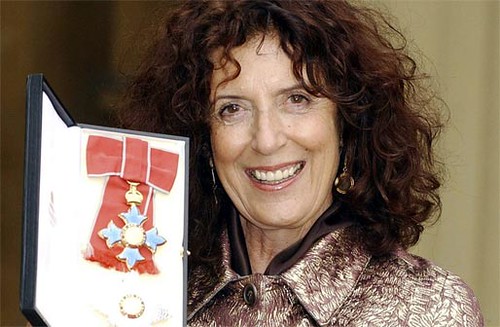
I am now a member of Jay Abraham's mentorship program!
Part one of an interview with the richest man in Europe and 5th richest man on Earth
Just an update on what I have been up to:
a) Got access to materials from the Jay Abraham mentorship program. Great stuff! So far I have read through his ideas on preeminence and I have also read a transcript of one of the first exposures I ever had to Jay: an interview he did with Anthony Robbins. As we speak I am also reading through an interview he conducted with Dr. Stephen R. Covey.
b) I spoke about how I finished reading the Nicholas darvas classic: How I Made $2,000,000 in the Stock Market. Darvas box theory was a bit complex to me and so I scampered about the net looking for some video or document that summarizes it. Then....another 'law of attraction'-type moment occured:
A couple of weeks back I had been searching for share trading educators and brokers so I could attend their free seminars and I found a company known as Protrader which sent me a free copy of their trading software package. As I was searching the net, looking for a simplified source of information on darvas box theory I began installing the Protrader software. Lo and behold, right there in the tutorial section was an explanation of the darvas box theory and how to apply it using Protrader. I have been going through the book again the last couple of hours trying to summarize his system and below are my scribbled notes so far:
Step one: Look for a stock that has recently reached a 52 week high.
Step two: Check for a stock that has had low trading volume and has suddenly had a huge surge in trading volume.
The reason we do this is because we assume if a stock is at a new high and more people are trading it, it’s a sign that more people are interested in that stock for one reason or another.
Step three: Make sure the stock you select is lively.
NB: If a stock moves from a higher to a lower box immediately sell it; SET THE STOP LOSS AT THE TOP OF THE PREVIOUS BOX OR IN BETWEEN THE BOTTOM OF THE CURRENT STOCK AND THE TOP OF THE PREVIOUS BOX.
Step four: Wait for the stock to move from the box you found it up into the next box and then buy it if:
a) It’s trading volume is high, increasing and is dramatically higher than a year ago and previous months.
b) That’s had a surge of price following its arrival at a 52 week high.
Step five: Different stocks have different ranges that define the bottom and top of their boxes.
Step six: When you purchase place a stop loss immediately and if you won’t be available to buy the stock make sure you place an “on-stop” order for the stocks you would like.
Step seven: When a stock jumps into the next box, change the position of the stop loss to the top of the previous box.
Step seven: Select stocks from industries with high growth.
Remaining question: How to set the limits of the box? How to select an industry?
I should committ to my first trade some time in the next few hours......
Be blessed
Mwas

Wednesday, October 24, 2007
Darvas BoxesVisa, Amazon.com and Jay Abraham
Just thought I would send out an update on what I have been doing since I finished stage one of optimizing my blog for adsense.
1) Visa: The credit card I applied for came in. To maximize leverage I was expecting between $10,000 - $50,000 but instead I got a $5,000 limit. Now this doesn't give me the amount of $$ I was planning to spend or the emotional leverage that the $10,000 - $50,0000 would have given me but it was sufficient for me to sign up for:
2) Jay Abraham's mentorship program: That promises to teach me within 13 months how to be completely financially free. Does this sound like something credible coming from the 2 billion dollar man.
Yup! I first heard of Jay Abraham through Anthony Robbin's Powertalk series (which I talk about later).when he was interviewed by Anthony Robbins Later I heard of him through Stephen Pierce and Michael Senoff.
After hearing about him enough times I was convinced this was a guy to take a chance on and now I am a part of his 13 month mentorship program. Will keep you all posted!
3) Amazon affiliate: I am now a part of the self-proclaimed most succesful affiliate program on the Web; the Amazon affiliate program. I signed up for my Book Review/Story Time blog because I intend on using it to review books that touch me in addition to writing stories.
So what have I done with my Visa $ since I got it:
1) Bought Anthony Robbins Powertalk series: There are 66 CDs and I got them for about $330 dollars. I decided to get the series as I have listened to a few of his Powertalk interviews and decided I would like to model his interview style when I begin my own podcast show (I was forced to post pone this until early next year.)
2) Paid off a library fine from many years back: $300
3) Signed up for the mentorship program, giving it a 30 day trial: $3,300
4) Darvas Boxes: I finished reading Nicholas Darvas book. Great stuff! He completely breaks down his trading system that he used to net $2,000,0000. I have done some minimal research online and through my Technical association group and discovered that his ideas have stood the test of time. Therefore in the spirit of modelling success I will take time to fully understand his trading system and then begin "test trading" (with small amounts of money) either tonight or tomorrow night. Will keep you all posted.
Mwas

Monday, October 22, 2007
Optimizing adsense ads design and positioning
When I first signed up for Adsense, the first thing I did was work on my ads design and positioning so that it blended seamlessly with the material. Therefore, it is for this reason that I skipped over Problogger's tips on optimizing positioning and design of adsense ads. Oddly enough, now that I have come to the end of the Problogger guide to maximizing adsense revenue, my adsense ads on all my three sites have disappeared. I am hoping I did not do anything to offend Google but I will keep you all updated. The next book I am going to read, or rather re-read is the E-myth by Michael Gerber because eventually I want to systemize all my passive income streams so that I can go out and focus on doing other things. Below is a video of a talk by the author Michael Gerber
Mwas
Sunday, October 21, 2007
Part 3 of Opimizing Adsense Revenue: Relevant Ads
Today I skimmed over Problogger's tips to making sure the ads on your site are relevant (i.e. they are in line with the blog content and therefore optimize on adsense revenue). Here are some things you can do to make sure adsense gives you relevant ads:
1)Increasing key word density: Once you have gone through the process of identifying keywords that produce high paying ads, make sure to include the key words in the title, first pargraph and sprinkle it throughout the article making it bold,underlining it etc.
2)Check your articles, sidebars, headings etc to make sure that you're not regularly using keywords that have nothing to do with your blog topic.
3) Block irrelevant ads.
Below is the most watched video in Youtube history -61 million views- the Internet definitely has potential for communicating ideas, no doubt in my mind.
Saturday, October 20, 2007
High Paying Google Adsense Words
I skimmed over the Problogger guide to getting high paying adsense ads because I decided that I would focus on the final two factors that influence adsense revenue namely relevant adsense ads and optimally designed and positioned adsense ads. These are things that I can implement and apply immediately and easily and so I will finish them off before coming back to obtaining high paying ads and increasing blog traffic.